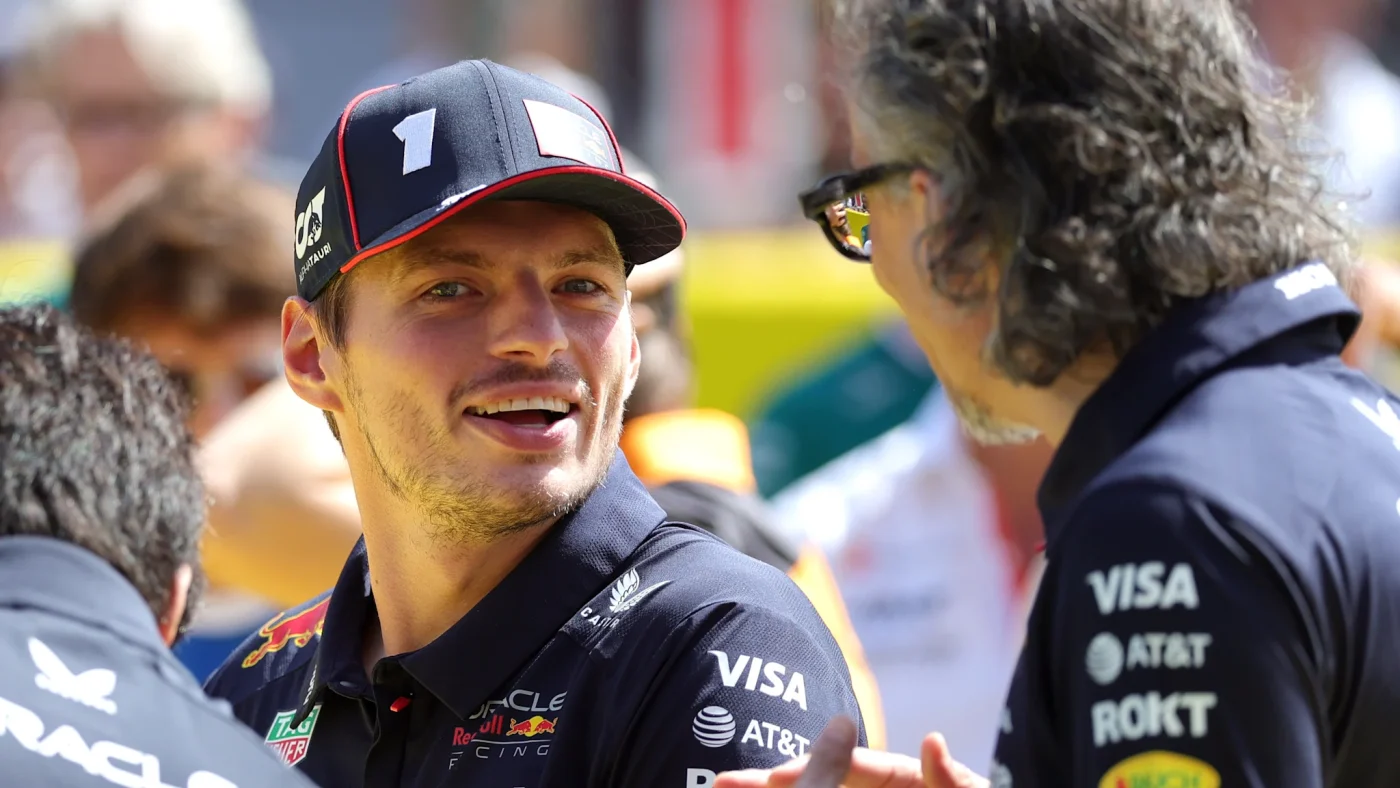

Starting from the pit lane after overnight setup changes and a new power unit, Max Verstappen charged back to third in Sunday’s Sao Paulo Grand Prix — a recovery Laurent Mekies described as on a par with last year’s remarkable comeback.
Verstappen had a difficult weekend, failing to get beyond Q1 on raw pace for the first time in his F1 career. Red Bull elected to make significant adjustments overnight, including suspension tweaks and fitting a fresh engine, which forced him to begin the 71-lap race from the pits. A puncture under a Virtual Safety Car after seven laps added further delay, but the 28-year-old mounted a strong recovery to finish behind winner Lando Norris and runner-up Kimi Antonelli, roughly ten seconds off the lead.
Mekies hailed the performance, saying the recovery from the pit lane to a podium in a dry, largely incident-free race was as impressive as Verstappen’s wet-weather climb from 17th to victory at the same track last year.
He admitted the team had misread the car’s balance following the Sprint. After the Sprint session they believed the car needed a different setup and took the risk of major changes before qualifying — a gamble that backfired in Q1. Mekies called the qualifying outcome painful but defended the approach, noting Red Bull must take calculated risks if they want to win. He added that, despite the earlier issues, the car felt alive during the Grand Prix and was probably capable of challenging for victory.
With three Grands Prix and one Sprint remaining this season, Verstappen trails Drivers’ Championship leader Lando Norris by 49 points. Mekies said the team will approach the closing rounds one race at a time rather than fixating on securing a fifth straight title. Their immediate priority is to get the car back into the optimal, or “alive,” operating window for Las Vegas, a street race that poses unusual demands with very low downforce requirements and cold tyre working ranges.